
By Mary Ann Ogbu
African dance is one of the continent’s most enduring and expressive cultural traditions. It is more than a form of entertainment; it is a powerful means of communication, storytelling, worship, celebration, and the preservation of history. Across Africa, dance reflects the beliefs, customs, and identities of different communities.
Southern Nigeria is home to a remarkable diversity of ethnic groups, each possessing unique dance traditions that have been preserved and passed down through generations. Among these are the Yoruba, Igbo, Edo (Benin), Ibibio, Ijaw, Itsekiri, Urhobo, Isoko, Efik, and several other communities. Although each group has its distinctive dance styles, costumes, and musical instruments, they all share a common goal of preserving cultural heritage and strengthening community identity.
Traditional dance has existed among the peoples of Southern Nigeria for centuries. Before written records became widespread, dance served as a medium for preserving history, communicating important events, teaching moral values, and expressing religious beliefs. Through dance, communities celebrated victories, welcomed visitors, honoured ancestors, marked harvest seasons, and commemorated significant stages of life. These traditions continue to play an important role in preserving the customs and cultural identity of Southern Nigerian communities.
The Igbo people are one of the three largest ethnic groups in Nigeria and are predominantly found in the South-Eastern states of Abia, Anambra, Ebonyi, Enugu, and Imo, with significant populations in Delta and Rivers States. They are renowned for their rich cultural heritage, entrepreneurial spirit, artistic creativity, and strong sense of community. Igbo culture is deeply rooted in customs, traditions, language, religion, family values, and respect for ancestors. Despite modernization, many aspects of traditional Igbo culture continue to shape the social and cultural lives of the people.
Festivals are among the most colourful expressions of Igbo culture. One of the most important festivals is the New Yam Festival (Iri Ji), celebrated at the end of the farming season. The festival marks the beginning of the yam harvest and gives thanks to God and the ancestors for a successful agricultural year. During the celebration, communities enjoy traditional dances, music, masquerade performances, feasting, wrestling competitions, and cultural displays.
Other important festivals include masquerade festivals(mmanwu), traditional title-taking ceremonies, and community cultural celebrations that reinforce unity and cultural identity.
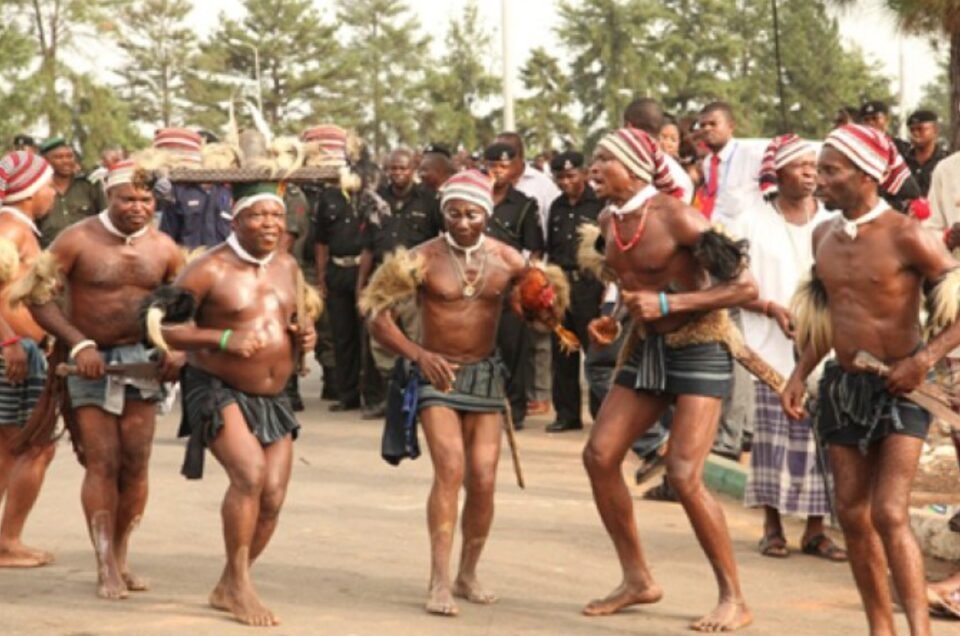
Dance occupies a central position in Igbo culture. One of the most famous Igbo dances is the Atilogwu dance, known for its energetic footwork, acrobatic displays, and synchronized movements. Another notable performance is the Mmanwu (Masquerade dance), where masked dancers represent ancestral spirits and perform during cultural and religious ceremonies. Egwu Amala is a graceful dance commonly performed during weddings and festivals, while Egwu Nkwa Umuagbogho is traditionally performed by young women to celebrate beauty, unity, and cultural heritage. The Egedege Dance, originating from Anambra State, is also widely recognized for its elegant movements, colourful costumes, and lively musical accompaniment.
Festivals play a central role in preserving Igbo culture. The most celebrated is the New Yam Festival (Iri Ji), which marks the beginning of the harvest season and gives thanks for a successful farming year.
Traditional Igbo attire also reflects the people’s cultural identity. Men often wear the Isi Agu shirt with a wrapper and a red cap, while women dress in brightly coloured wrappers, blouses, coral beads, necklaces, and head ties during ceremonies and festivals.
Through these traditions, the Igbo continue to celebrate their identity and contribute significantly to Nigeria’s rich cultural diversity.
The Yoruba people, predominantly found in the South-Western region of Nigeria, possess one of Africa’s richest cultural traditions. Dance is central to Yoruba festivals, religious ceremonies, marriages, naming ceremonies, and royal celebrations. Many Yoruba dances are associated with traditional deities and cultural festivals. Their performances feature energetic footwork, graceful body movements, expressive gestures, and colourful traditional attire. Music is provided by traditional instruments such as the Dùndún (Talking Drum), Bàtá Drum, Gángan, Sekere (beaded gourd rattle), and metal bells. These instruments create complex rhythms that guide dancers and communicate messages during performances.
The Ibibio people are predominantly found in Akwa Ibom State. They are known for their rich cultural heritage, strong communal values, and vibrant traditional festivals. Traditionally, they engage in farming, fishing, trading, and craftsmanship, while placing great importance on family unity, respect for elders, and community cooperation.
Dance occupies a central place in Ibibio culture. It is performed during marriage ceremonies, naming ceremonies, harvest festivals, funerals, and the installation of traditional rulers. One of their most popular dances is the Ekombi Dance, a graceful performance by young women characterized by elegant body movements, coordinated footwork, rhythmic hand gestures, and joyful expressions. Another important performance is the Ekpo Masquerade Dance, which represents ancestral spirits during traditional ceremonies.
Traditional Ibibio musical instruments include the Ekwe (wooden slit drum), Obodom (large drum), Ntakrok (metal gong), rattles, bells, and flutes.
The Ijaw people are among Nigeria’s oldest ethnic groups and are primarily located in Bayelsa, Rivers, Delta, Ondo, and Akwa Ibom States. Living within the Niger Delta, they have traditionally depended on fishing, canoe building, farming, and trading. Their dances reflect their close relationship with rivers and the natural environment. Many performances imitate the movement of waves, fish, and canoes while celebrating courage, unity, and gratitude. The Owigiri Dance is one of their well-known traditional performances, alongside various masquerade dances presented during festivals and cultural ceremonies.
The Ijaw employ traditional musical instruments such as talking drums, wooden drums, gongs, rattles, hand clappers, and flutes, accompanied by songs performed in a call-and-response style.
The Edo people, historically associated with the ancient Kingdom of Benin, are renowned for their royal traditions, magnificent bronze artworks, and highly organized cultural institutions. The Benin Kingdom remains one of Africa’s greatest historical civilizations.
Traditional dance plays a significant role in royal ceremonies, festivals, weddings, coronations, and cultural celebrations. Many dances honour the Oba of Benin, the traditional ruler and custodian of Edo culture. Edo dances are characterized by graceful movements, disciplined formations, colourful costumes, and elaborate coral bead regalia.
Notable performances include the Ekassa Dance and several royal court dances presented during palace ceremonies. Traditional musical instruments include ceremonial drums, talking drums, bronze bells, wooden gongs, rattles, ivory horns, and the Agidigbo, depending on the occasion.
The beauty of Southern Nigerian dance is enhanced by its colourful costumes and traditional musical instruments. Dancers often wear embroidered garments, wrappers, coral beads, raffia skirts, masks, feathers, body ornaments, and symbolic accessories that reflect their cultural identity.
Musical accompaniment commonly includes drums, wooden slit drums, talking drums, gongs, rattles, flutes, bells, horns, and hand clapping. These instruments establish rhythm, coordinate movement, and enrich the storytelling elements of each performance.
Traditional dance serves numerous important functions within Southern Nigerian society. It strengthens community unity, preserves historical memory, promotes moral values, celebrates important life events, and honours religious and ancestral beliefs.
Dance is an essential feature of weddings, naming ceremonies, harvest festivals, funerals, coronations, cultural festivals, and community celebrations. It also provides entertainment while educating younger generations about their history, customs, and responsibilities.
Despite modernization and globalization, traditional dance continues to influence contemporary Nigerian culture. Many elements of Yoruba, Igbo, Edo, Ibibio, and Ijaw dances are incorporated into modern stage performances, cultural festivals, and Afrobeats choreography. Nigerian artists and dance groups regularly showcase these traditions on international platforms, helping to promote the country’s cultural heritage worldwide.
The traditional dances of Southern Nigeria represent far more than artistic performances. They embody the history, beliefs, values, and collective identity of the people who created them. From the energetic movements of the Yoruba and Igbo to the graceful elegance of the Ibibio, the river-inspired performances of the Ijaw, and the regal court dances of the Edo (Benin), each tradition contributes to the rich cultural mosaic of Southern Nigeria.
Preserving these dance traditions is essential for safeguarding Nigeria’s cultural heritage and ensuring that future generations continue to appreciate the beauty, diversity, and historical significance of African dance. As these traditions evolve and gain international recognition, they remain enduring symbols of unity, creativity, and cultural pride.
