
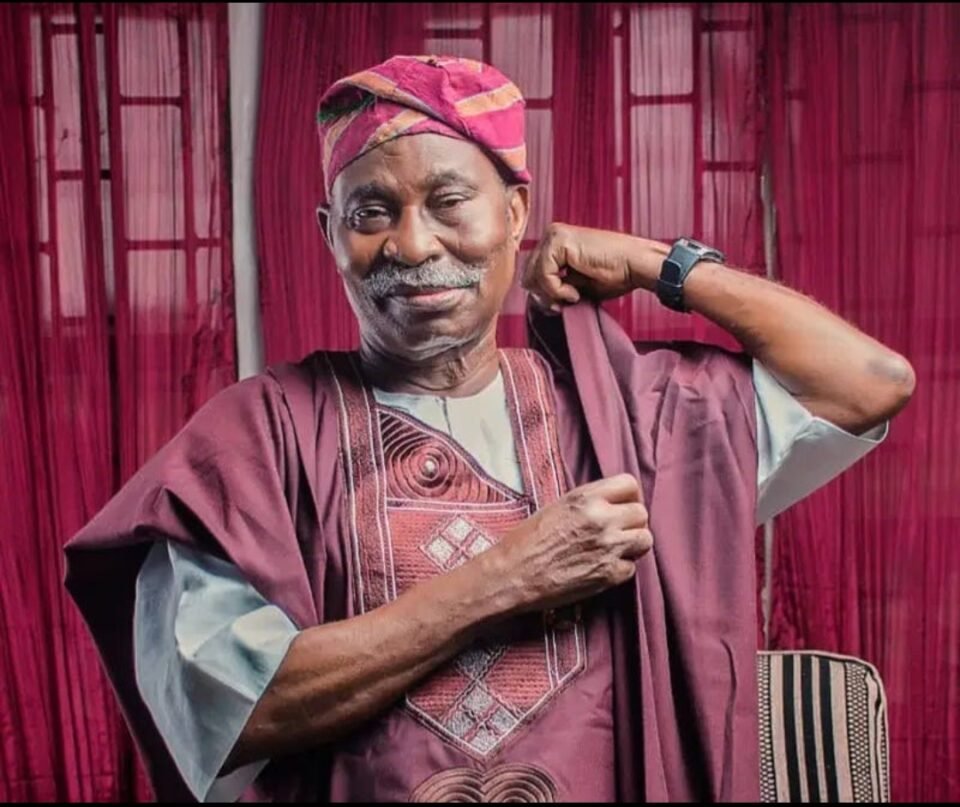
Professor Idowu Akanbi Sobowale, OON, one of Nigeria’s foremost journalism scholars, media educators and public administrators, died on Thursday, October 8, 2026, at the age of 85. His passing marks the end of a remarkable life devoted to journalism, communication research, higher education and public service.
A family member, Dr Akinniyi I. Sowunmi, announced the death in a statement titled “Transition to Glory,” saying that Sobowale had “joined the saints triumphant” that morning. The family said funeral arrangements would be announced later.
Early life and education
Sobowale was born in Ashipa, near Abeokuta, Ogun State, into a humble family. Accounts of his life describe his father as a peasant farmer and his mother as a petty trader; in his early years, he worked as a farmer and apprentice mechanic before entering formal schooling in 1954.
He attended Lagos Baptist Academy, graduating in 1964. After secondary school, he briefly worked as a health inspector with the Lagos City Council, but a chance meeting with Chief Bisi Onabanjo led to an introduction to Alhaji Babatunde Jose, then editor of the Daily Times, who employed him in journalism.
At the Daily Times Training School, Sobowale was among the pioneer students. He was reportedly so outstanding that, after only two months of the planned 12-month training, the school’s Australian director, Leslie W. Riley, recommended his immediate deployment to the newsroom.
A journalist and scholar
Sobowale later studied at the University of Lagos, earning both a Diploma and a Bachelor of Arts (Honours) degree in Mass Communication. In 1975, he left the Daily Times to join UNILAG as an assistant lecturer in the Institute of Mass Communication.
A year later, he travelled to Syracuse University in the United States for postgraduate studies. He returned in 1978 with a PhD, specialising in Scientific—or Precision—Journalism, a field concerned with the rigorous, evidence-based reporting of science, technology and public affairs.
His academic training and newsroom experience shaped a career that bridged the “town and gown” divide. He did not see journalism and scholarship as separate callings; rather, he argued throughout his life that communication research should serve professional practice, democratic accountability and national development.
Pioneer of opinion polling
One of Sobowale’s most enduring contributions to Nigerian journalism was his role in introducing opinion polling into the country’s media practice. While at UNILAG, he established a Public Opinion Polling Desk at The Punch under the leadership of Sam Amuka.
The first findings from the surveys were published in The Punch on April 11, 1979. At a time when Nigerian public discourse was increasingly shaped by electoral politics, his work helped establish a more systematic method for measuring public opinion and bringing citizens’ views into newspaper reporting.
He later returned to the subject in his inaugural lecture at Lagos State University, delivered on September 29, 2005, titled “Opinion Polling in Nigeria: The Neglected Route to National Development.” The lecture reflected his conviction that credible polling could strengthen governance, public policy and democratic participation.
Building institutions
Sobowale’s influence extended well beyond the classroom. He served twice as acting head of the Department of Mass Communication at the University of Lagos, helping to shape one of Nigeria’s most important centres for communication training.
He was also closely associated with the establishment of Lagos State University in 1983. Former LASU Vice-Chancellor Professor Abisogun Leigh identified Sobowale and the late Professor Femi Agbalajobi as the two people who instigated the idea of creating the university.
At LASU, Sobowale became Professor of Communication Studies and was instrumental in developing its mass communication programme. He served as the pioneer Dean of the LASU School of Communication—also known as the Adebola Adegunwa School of Communication—from 2004 to 2007.
His academic leadership later took him to Olabisi Onabanjo University, Ago-Iwoye, where he helped develop postgraduate programmes in mass communication. He also served as a dean at Caleb University, Imota, Lagos, whose Faculty of Communication and Media Studies was named in his honour.
Public service
Sobowale brought his expertise in education and communication into government. He served as Special Adviser on Education to the late Lagos State Governor, Alhaji Lateef Jakande, and later as Special Assistant to the governor.
Between 1999 and 2003, he served as Lagos State Commissioner for Education under then-Governor Bola Tinubu. In that role, he was part of the administration responsible for education policy in a state whose public-school system and higher-education institutions faced major demands from a rapidly growing population.
His public-service record reinforced the central theme of his career: that knowledge must be applied to solve practical problems. Whether in the newsroom, lecture hall or government office, he consistently linked communication, education and development.
ACSPN and professional legacy
Sobowale was a foundational figure in the Association of Communication Scholars and Professionals of Nigeria (ACSPN), serving as Chairman—and later Life Chairman—of its Board of Trustees. He repeatedly urged scholars and media practitioners to work together, arguing that such collaboration was essential if communication was to contribute meaningfully to national development.
In recognition of his contributions, ACSPN instituted the biennial Idowu Sobowale International Conference in his honour. The conference became a platform for examining media, governance, democracy, digital communication and the role of scholarship in public life.
Even in his later years, he remained engaged with the association. In 2025, he hosted ACSPN’s national leadership and urged its new executives to preserve the vision of the association’s founding fathers and sustain its work across generations of scholars and practitioners.
National recognition
Sobowale received the national honour of Officer of the Order of the Niger (OON) from former President Olusegun Obasanjo in recognition of his contributions to national development.
In 2014, he received the Lifetime Achievement Award at the 23rd Diamond Awards for Media Excellence (DAME). The award recognised his lifelong devotion to media development and his role in training hundreds of communication professionals now holding responsible positions across Nigeria’s media industry.
Enduring influence
Professor Sobowale belonged to the generation that helped transform Nigerian mass communication from a largely vocational newspaper tradition into a rigorous academic discipline. His career demonstrated that a journalist could be a researcher, a teacher, an institution-builder and a public servant without abandoning the core duty of journalism: informing the public and holding power to account.
He was widely described as a “teacher of teachers,” an administrator of uncommon ability and an opinion leader. Yet perhaps his most important legacy lies in the generations of journalists, lecturers, researchers, editors and communication professionals he trained, mentored and inspired.
His death is therefore not only a personal loss to his family and associates, but a major loss to Nigeria’s media and communication community. As tributes continue to pour in, Sobowale will be remembered as a pioneer who gave Nigerian journalism new intellectual tools, helped build institutions that still train communicators, and spent a lifetime insisting that communication must serve truth, learning and national progress.
