
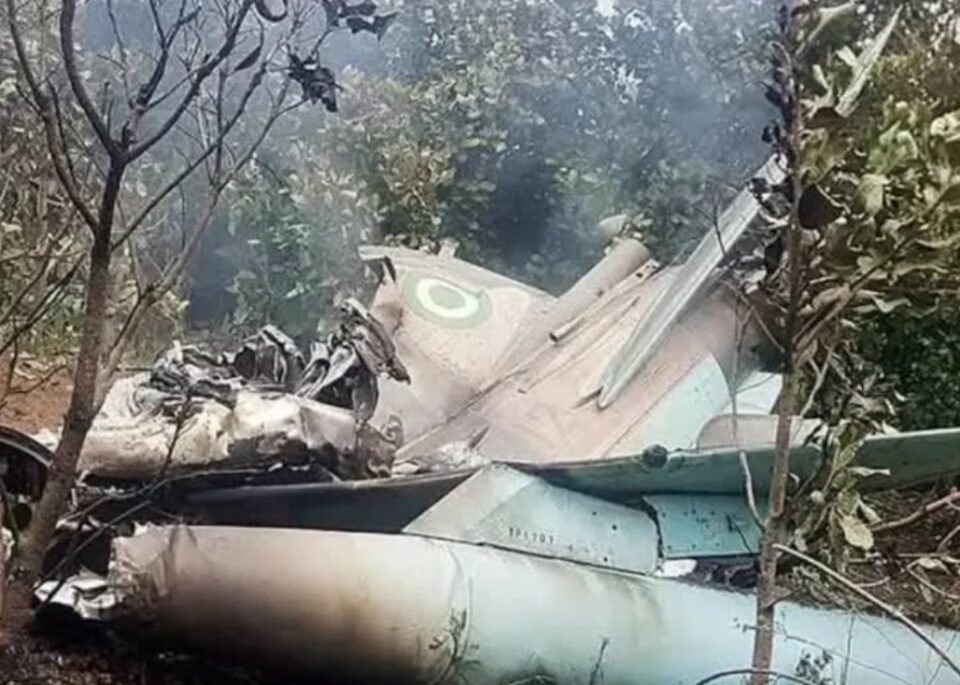
A Board of Inquiry has been formally constituted by the Nigerian Air Force to investigate the October 5 crash of an ATR-42 aircraft in Igbokoda, Ondo State, which claimed 25 lives, even as recovery operations battle difficult swampy terrain to retrieve victims’ remains and critical flight data.
Air Commodore Ehimen Ejodame, Director of Public Relations and Information for the NAF, clarified that the Chief of the Air Staff, Air Marshal Sunday Kelvin Aneke, had directed a comprehensive investigation under established military aviation accident procedures, dismissing earlier concerns about delays in forming a formal probe panel. The investigation will examine all circumstances surrounding the crash of aircraft NAF 931, which was en route from Benin City to Lagos on a routine mission when it disappeared from radar and came down near a Naval Base in the Ilaje Local Government Area.
While the Nigerian Safety Investigation Bureau (NSIB) initially offered technical support, the board indicated that because the aircraft is a military asset, primary investigative responsibility rests with the Air Force rather than the civilian aviation safety agency.
Search-and-rescue teams continue to face significant challenges at the crash site, where the aircraft plunged into a mangrove swamp with murky waters that have complicated access to the submerged wreckage. Local officials and eyewitnesses reported that debris, human remains, and personal belongings were scattered across the difficult-to-reach area, with divers deployed to work in the swampy creek.
The challenging conditions have delayed retrieval of the flight recorders (black boxes), which are critical for determining whether mechanical failure, weather conditions, or other factors contributed to the accident. Air Marshal Aneke has described the crash as a “deeply painful incident” for the Nigerian Air Force and the nation, pledging full institutional support to bereaved families during the mourning period.
Recurrent Military Aviation Incidents
The Igbokoda disaster has reignited concerns about the frequency of military aircraft crashes in Nigeria, with former DSS Director Mike Ejiofor calling for a broader probe into the operations, maintenance protocols, and overall condition of the country’s military aviation fleet. According to published records, this marks the latest in a series of fatal military aviation accidents dating back to 2018, underscoring persistent safety challenges within the sector.
The NAF has opened a condolence register at its Headquarters in Abuja for senior government officials, diplomatic representatives, security agency heads, and other sympathisers to pay their respects to the fallen personnel and civilians. The Service continues to urge the public to refrain from speculation and circulation of unverified reports as the investigation progresses, appealing for respect for the privacy and dignity of victims’ families.
The 25 confirmed fatalities comprised five crew members and 20 passengers, including both uniformed personnel and civilians. The NAF released a complete list of names on October 6, identifying the flight crew as Squadron Leader M.I. Aburime (Flight Captain), Squadron Leader A.P. Man-Ugwueje and Flight Lieutenant I.S. Bako (Co-pilots), along with Warrant Officer Abubakar A. and Corporal H.C. Uguru (Aircraft Technicians).
Among the passengers were commissioned officers, non-commissioned officers, and civilian travellers, including Mrs. Ezeh Nneka, Godstmine Tarabina, Joy Micheal, Sunday Micheal, Ukeme David, and Gideon Omotola. All 25 perished in the crash, with no survivors found despite immediate activation of search-and-rescue operations involving multiple emergency response agencies.
The constituted Board of Inquiry is expected to produce a preliminary report before releasing comprehensive findings on the cause of the accident, with Air Marshal Aneke assuring that verified information will be communicated as the investigation unfolds. Aviation safety experts note that recovery of the flight data recorder and cockpit voice recorder from the submerged wreckage remains a priority for investigators seeking to establish whether technical malfunction, operational error, or external factors led to the tragedy.
