
By Fortune Mbonu
Peter Obi’s political identity has long been closely associated with one word — frugality.
From his speeches about reducing government waste to his repeated emphasis on responsible management of public resources, the former Anambra governor has built much of his political appeal around the idea that leadership should be economical.
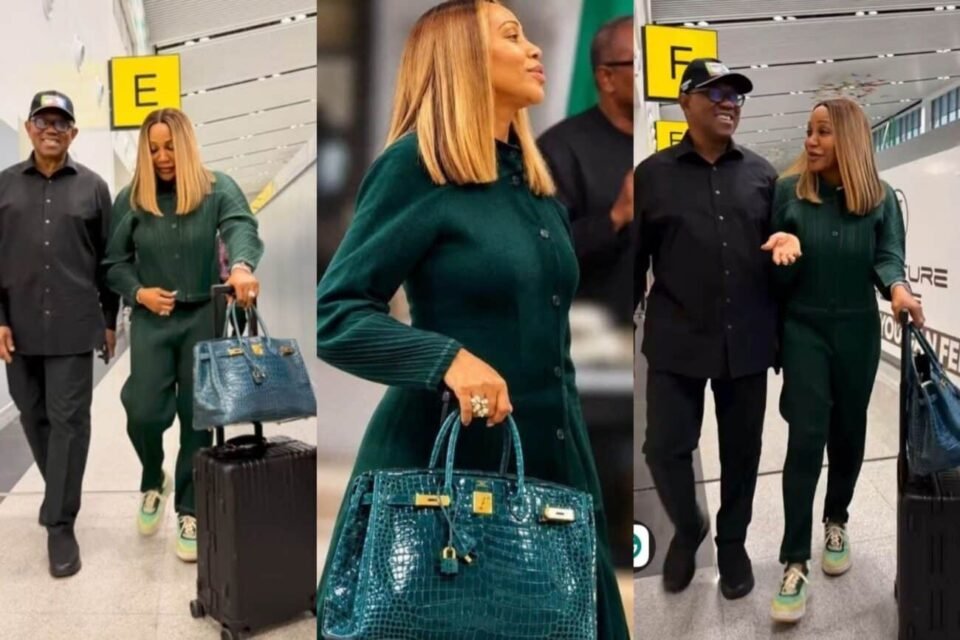
That is why a luxury handbag reportedly belonging to his wife, Margaret Obi, has attracted unusual attention.
Social-media users have circulated claims that the bag could be worth between ₦200 million and ₦250 million. The figure, however, has not been independently verified as the actual amount paid for the particular handbag.
Still, the controversy has exposed a tension at the heart of political image-making.
A politician can be personally wealthy while advocating fiscal discipline. The two positions are not necessarily contradictory. A wealthy individual can also legitimately purchase luxury goods with private funds.
But politics is rarely governed by logic alone.
For supporters, Margaret Obi’s handbag is simply a personal possession. For critics, it represents a contradiction between the image of modesty projected by the Obi political brand and the conspicuous luxury associated with his family.
That distinction may ultimately matter more than the handbag itself.
And as we have seen frequently in politics, perception can sometimes be as powerful as proof.
