
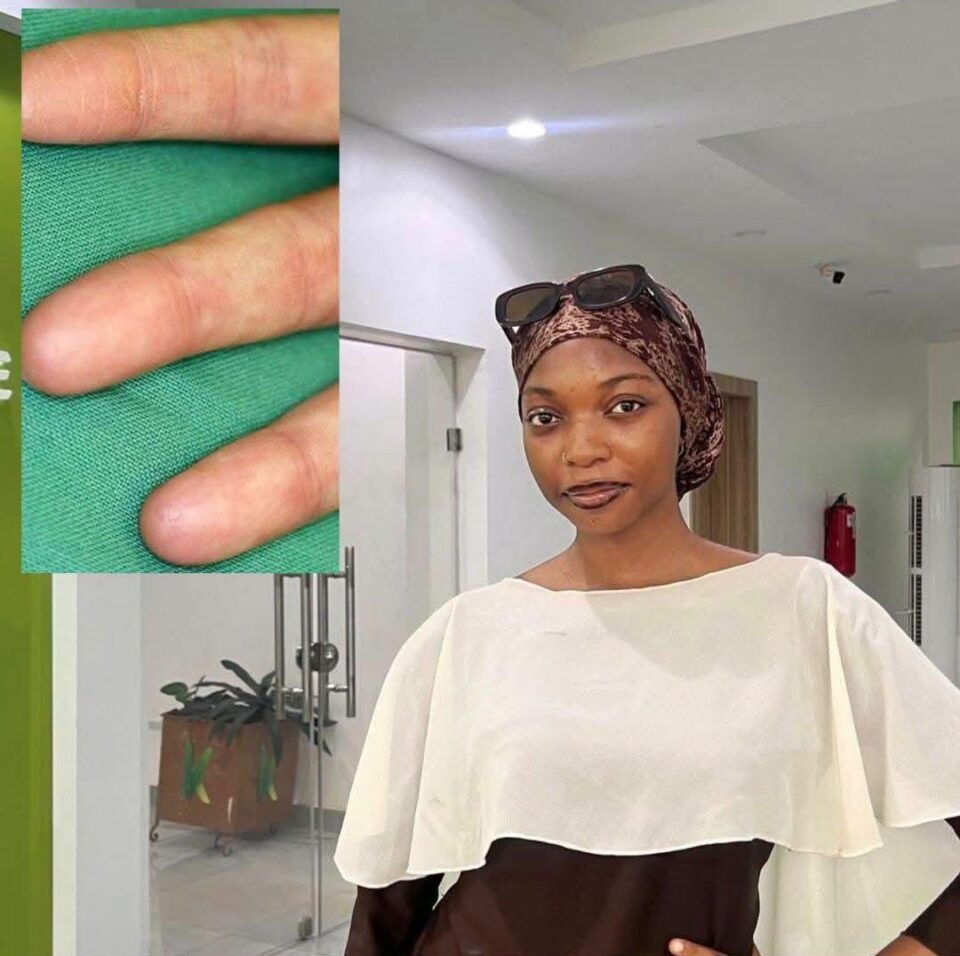
By Fortune Mbonu
For most candidates preparing for the Joint Admissions and Matriculation Board (JAMB) examination, biometric capture is an ordinary part of the registration process, a brief scan of the fingers, a confirmation on the screen, and then the process continues.
For Jidds, a Nigerian woman known online as @jidds.xo, it became an ordeal. Born with adermatoglyphia, an extremely rare genetic condition characterised by the absence of fingerprint ridges, Jidds has spent years navigating systems designed around an assumption that everyone has readable fingerprints.
Her experience, recently shared online, has drawn attention to a problem that extends beyond one examination or one candidate: what happens when technology designed to identify people cannot recognise the very people it is supposed to serve?
Jidds’ difficulties with biometric identification reportedly began during her JAMB registration in 2017. At the registration centre, the biometric scanners could not properly read her fingers. What should have been a routine process became a prolonged struggle.
She spent an entire day at the centre, reportedly watching more than 200 candidates register ahead of her while officials attempted to find a way around the problem.
In their efforts to produce a readable fingerprint, several unconventional methods were tried. Her hands were reportedly rubbed with sand, methylated spirit, chalk and watermelons. Her skin was also scrubbed against a stone.
The attempts may sound unusual, but they reflected a larger problem: the registration process depended on a biometric feature that her body simply did not possess.
Eventually, a faint print reportedly registered but the problem was far from over.
When a Fingerprint Becomes a Barrier
Biometric identification is built on the idea that a person’s physical characteristics can provide a reliable way of establishing identity. Fingerprints are particularly useful because the ridge patterns on people’s fingers are generally distinctive and persistent.
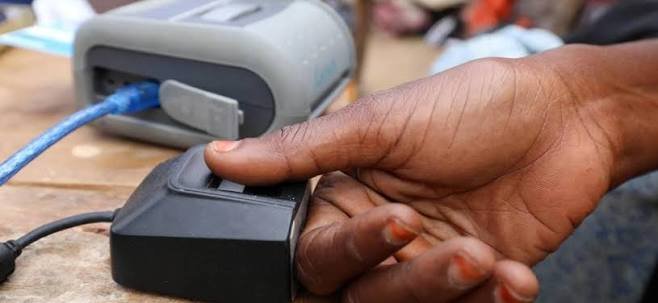
For someone with adermatoglyphia, however, that assumption breaks down.The absence of fingerprint ridges means that conventional fingerprint scanners may struggle or fail entirely to produce the data required for authentication and for Jidds, the difficulty reportedly followed her beyond JAMB registration.
During examinations, she could sometimes enter examination halls successfully, only to encounter problems when leaving because exit scanners failed to recognise her fingerprints. Similar challenges reportedly occurred during banking transactions and NYSC verification. On some occasions, she reportedly had to use her feet for biometric verification.
What might appear to be an unusual workaround is, from another perspective, evidence of a system struggling to accommodate a person whose physical characteristics fall outside its standard parameters.
The Human Cost of a Technical Failure
The story is not simply about a malfunctioning scanner.
Behind every failed biometric scan is a person waiting for a service they are entitled to access.
For most people, a failed fingerprint scan is an inconvenience: wipe the finger, try again and move on.
For someone with adermatoglyphia, repeated failure can mean embarrassment, prolonged waiting, uncertainty and dependence on the willingness of officials to find an alternative.
Jidds’ experience at the JAMB centre illustrates this vividly. While hundreds of candidates moved through registration, she remained behind, unable to proceed because the technology could not produce the expected result from her fingers.
The problem, therefore, shifts from “Why can’t the machine read this fingerprint?” to a more important question:
What happens when the machine’s definition of a valid identity does not accommodate the person standing before it?
JAMB and the Question of Accommodation
According to the information surrounding Jidds’ experience, JAMB has administrative provisions for candidates whose fingerprints cannot be properly captured because of medical or physical abnormalities.
Affected candidates are typically advised to seek assistance from a JAMB State Office or the board’s appropriate administrative channels, rather than repeatedly attempting biometric capture at ordinary commercial Computer-Based Test centres.
For extreme biometric challenges involving certified physical or biometric abnormalities, current directives reportedly provide for special arrangements, including registration and examination at JAMB’s National Headquarters in Abuja under specialised supervision.
Such provisions are important because they acknowledge a fundamental reality: not every biometric failure is caused by poor scanning technique or an improperly positioned finger.
Sometimes, the problem is the underlying assumption built into the system.
Designing for the People Technology Cannot See
Jidds’ story raises a broader question about accessibility in Nigeria’s increasingly digital society.
Biometric systems are now part of everyday life. They are used in education, banking, government verification, employment and other essential services.
As these systems become more widespread, exceptions cannot remain afterthoughts. People with rare physical conditions should not have to discover, one institution at a time, that the technology governing access to essential services was not designed with them in mind.
There must be clear alternative verification procedures, properly trained personnel and accessible escalation channels for people whose biometrics cannot be captured normally.
The responsibility should not rest entirely on the affected individual to explain their condition, endure repeated failed attempts or persuade officials to improvise a solution.
Beyond One Viral Story
Jidds’ story has resonated because it makes an otherwise invisible problem visible. Her experience demonstrates how a seemingly neutral technology can create exclusion when its assumptions do not account for human variation.
The goal of biometric systems is identification. But identification should not become a barrier to education, banking, employment or participation in public institutions.
Technology is often described as a tool for making systems faster, more efficient and more secure. Yet efficiency means little if the people who fall outside the standard design are left waiting.
For Jidds, a fingerprint that could not be read became a recurring obstacle.
For institutions, her experience offers a lesson: when designing systems for millions of people, the exceptions are not merely technical edge cases. They are people.
And sometimes, the most important test of an identification system is not whether it can recognise the majority but whether it knows what to do when it cannot.
