
By Fortune Mbonu
After 12 years on Nigerian roads, Uber has pulled the plug on its ride-hailing business. Officially, the company says the decision reflects changing business priorities. But its simultaneous multibillion-dollar push into autonomous vehicles raises a bigger question: is Uber gradually preparing for a world where there are fewer drivers behind the wheel?
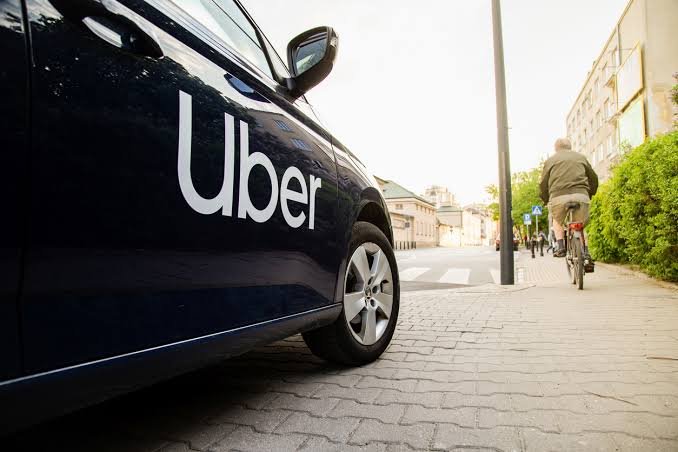
For 12 years, the Uber logo became part of the Nigerian urban landscape.
In Lagos, Abuja and other cities, the familiar ritual was almost second nature: open the app, enter a destination, watch the vehicle approach on the map and get moving.
Uber did more than provide transportation.
It changed how Nigerians thought about taxis.
A smartphone replaced the roadside gesture. GPS replaced guesswork. Digital payments and in-app ratings brought a degree of structure to a transportation sector that had traditionally depended heavily on personal negotiation.
Then, on September 2, 2026, the ride stopped.
Uber ended its 12-year operation in Nigeria.
The company has not said that Nigeria was unprofitable or that autonomous vehicles were the reason for the decision. Instead, it said its decision followed a review of its operations and changing business priorities and investment focus across Africa.
But there is something difficult to ignore about the timing.
Because while Uber was leaving Nigerian roads, the company was simultaneously racing towards a very different kind of road. One without human drivers.
The timing of Uber’s Nigerian exit makes the transformation particularly striking.
On September 2, Uber ended its Nigerian operations. The following day, Uber and British autonomous-driving company Wayve launched a robotaxi service in London. The initial vehicles still have human safety drivers because fully driverless operation requires further regulatory approval, but the service represents a major step toward autonomous commercial transportation.
So, within roughly 24 hours, Uber went from saying goodbye to Nigerian roads to putting autonomous technology onto one of the world’s most complicated urban road networks.
That juxtaposition is difficult to overlook.
In Nigeria, Uber was leaving the road while it was preparing to redefine the road in London.
What does this mean for Nigeria?
This is perhaps the most uncomfortable part of the story.
Nigeria’s transportation problems are enormous.
Traffic congestion remains severe. Public transportation is often inadequate. Millions of people need reliable mobility every day.
And yet the country may be watching one of the world’s largest mobility companies withdraw just as autonomous transportation begins entering its commercial era.
That does not necessarily mean Nigeria has been abandoned technologically.
But it does raise questions about whether Nigeria will be a consumer of the next generation of mobility or a participant in building it.
If autonomous vehicles eventually become cheaper and more widespread, Nigerian cities will eventually have to confront them.
Regulators will need new rules.
Insurance companies will need new models.
Drivers will face questions about their livelihoods.
Transport unions will face disruption.
And technology companies will need to determine whether Nigeria is a market worth entering.
So, did Uber leave Nigeria because of robotaxis?
There is no public evidence establishing that as the reason.
Uber has not made that claim.
The company’s official explanation points to changing business priorities and investment focus, while industry conditions in Nigeria have made ride-hailing more difficult.
But it would also be difficult to ignore Uber’s broader transformation.
The company is investing heavily in autonomous transportation.
It is launching robotaxi partnerships.
It is restructuring its business.
And it is attempting to position itself for a transportation future that may depend less on human drivers.
That makes the Nigerian exit potentially more significant than the closure of another international operation.
It could be a small piece of a much larger strategic puzzle.
