
By Fortune Mbonu
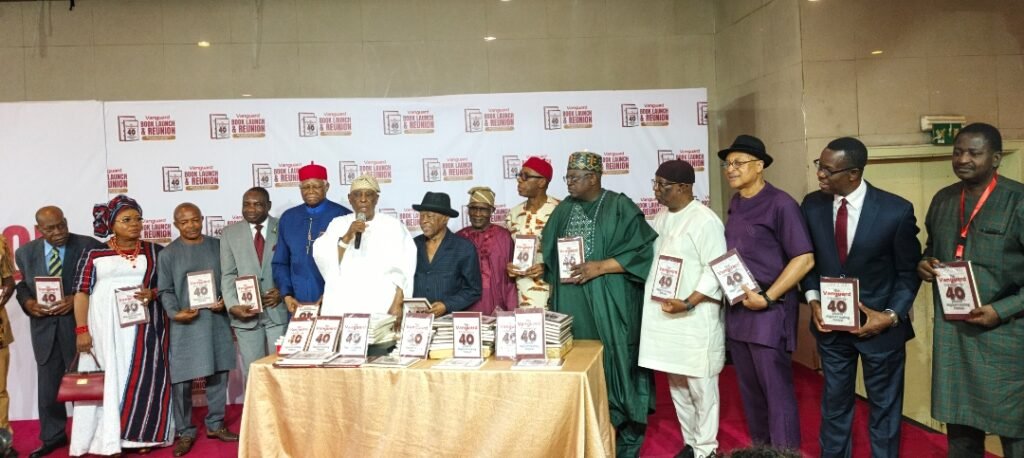
Uncle Sam Amuka’s retirement handover at the launch of the book, titled “The Vanguard Chronology: 40 years of Nigeria’s leading tabloid,” recently at the Civic Center, Lagos, underlines a larger theme: ownership vs lifelong employment. In this article, the author argues that owning a business, even a modest one, is often a wiser route for long-term security and legacy than remaining a perpetual employee.
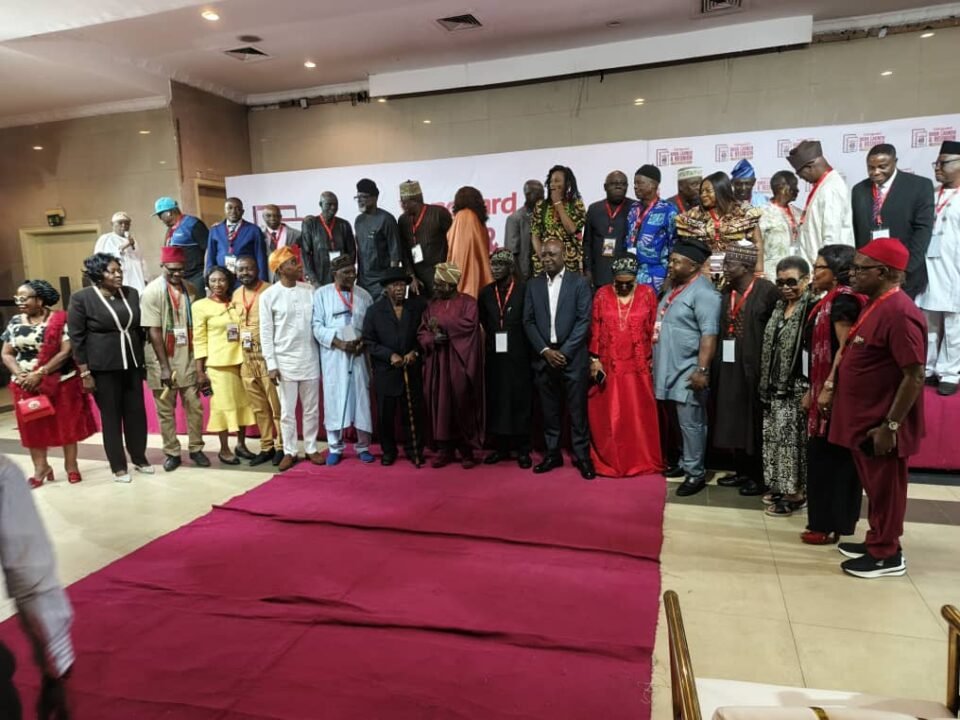
When Sam Amuka, founder of Vanguard Media Limited, stood to announce his retirement and introduced his successor, he did more than mark the end of a long working life. At 91, he offered a living lesson about how ownership changes the arc of a career, a family’s security, and a legacy.
“I have retired as chairman. The new chairman is here. This is Omasan Dudu, who happens to be my daughter,” Uncle Sam said after the ceremonial cake had been cut.
The moment was simple and ceremonial, yet it carried a sharp lesson: Uncle Sam is still present at Vanguard because he is the owner. Had he been merely an employee, that presence, influence and wealth would have been far less likely.
A life anchored in ownership
Vanguard is about 40 years old. Sam Amuka is 91. A quick calculation raises an important question: at what age did he build Vanguard, and what did that decision make possible? The answer matters for more than curiosity: it shows that although early entrepreneurial choices compound into decades of security and influence, it’s never late to begin. Uncle Sam set up Vanguard when he was 50 years old. Ownership put him in a position to hand the business, and its benefits, to the next generation, and specifically to his daughter.
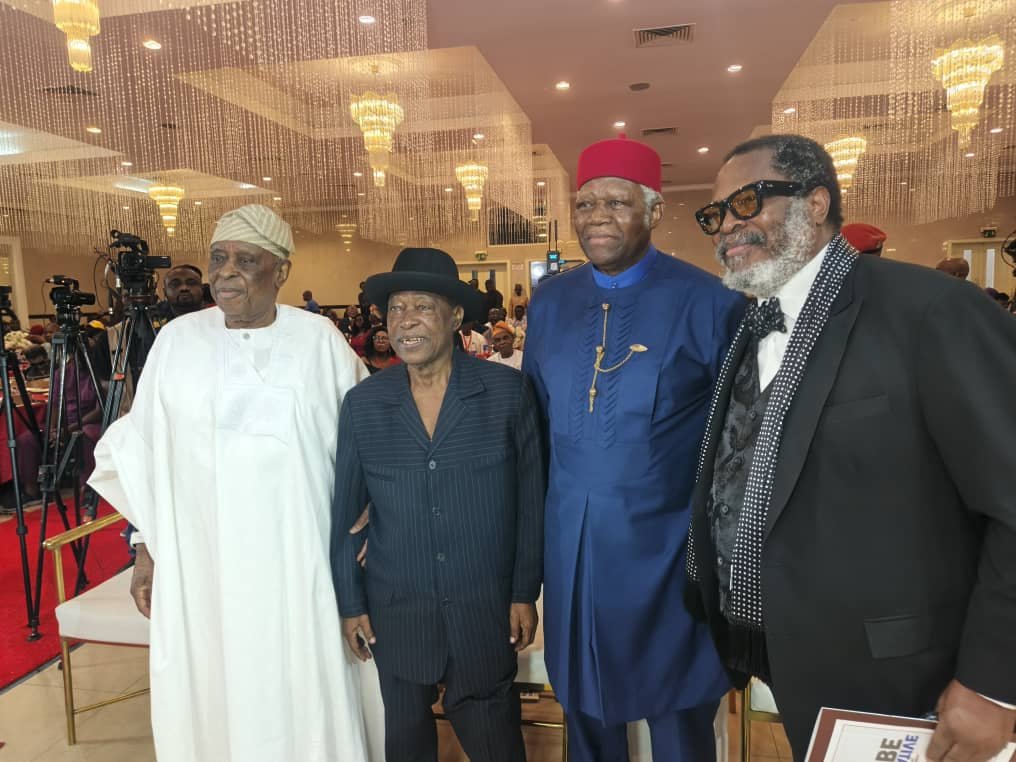
The scene at his retirement underlined the point. The August 19th event drew perhaps the largest gathering of ex-Vanguard staff anyone can remember. If Vanguard is a barracks where soldiers come and go but the barrack remains, Uncle Sam is still there because he built the barracks. Employees, no matter how dedicated, generally depart with their wages and their memories. Owners keep the institution, its wealth and its capacity to empower others.
From salary to stake: why it matters
Many people trade years of toil for a steady paycheck. That path provides short-term safety and predictability, but it also has limits.
The first limit is a finite earning horizon. Salaries typically stop or shrink at retirement. Pension schemes in many places are meagre or inconsistent.
The second limit is limited control. Employees rarely influence strategic decisions that create large increases in value. Also pay increases are constrained by organizational structures, while equity and ownership can multiply returns. Ownership, even of a small enterprise, changes those dynamics.
With ownership comes perpetual value creation. A business, if well-run, continues to generate returns long after its founder stops working. It also comes with transferable wealth. Businesses can be passed down, sold, or used to create financial instruments for family security. Owners shape culture, brand and impact; they set terms and build institutions.
The proverb that explains it
Our people say, “Onye ike kwere mere nke ya” — if you have the ability, establish your own thing. Sam Amuka’s life is a practical illustration of that saying. The slogan isn’t a denial of the dignity of paid work; rather, it is a nudge toward creating durable value that benefits not just the individual but descendants, employees and community.
A spectrum of ownership
Ownership doesn’t mean you must be a media magnate. It spans a spectrum that suits different risk profiles and life stages:
Side hustle ownership: Small, part-time ventures (trading, services, online businesses) that grow into steady income streams.
Small-business ownership: Local shops, farms, workshops, creative studios — assets that can employ others and provide community resilience.
Professional ownership: Lawyers, doctors or consultants who move from salaried roles to partnership or private practice.
Equity ownership: Taking stake in startups or buying shares in businesses to combine employment with ownership upside.
Practical steps for employees who want to own
For those who recognise the limits of a salary but are unsure where to begin, here are manageable steps:
Start with clarity: Define your financial goals, risk tolerance and timeline.
Build savings and emergency funds: Owning requires capital; protect yourself first.
Learn the basics: Study small-business accounting, marketing and legal basics. Mentors help. Start small and validate: Launch a low-capital pilot before scaling.
Reinvest early profits: Use earnings to grow the business rather than extract them all.
Formalize succession: Plan how the business will survive and benefit family or staff if you step back.
Not a one-size solution
Ownership has risks: businesses fail, capital may be lost, and entrepreneurship demands time and resilience. But those risks are different from, and often more controllable than, the long-term risk of being solely dependent on an employer whose fortunes you don’t control. Media business wasn’t the only business Uncle Sam tried, but it’s the only visible and profitable one today. Even until two or three years ago, Vanguard was struggling to pay salaries and was on the verge of collapse.
The final cut: a legacy, not a paycheck
Uncle Sam’s announcement — brief, personal and public — did more than hand over a chair; it symbolised a life shaped by a decision to own. At 91 he could retire with dignity, surrounded by former colleagues and with a clear line of succession. That outcome came not primarily from a lifetime of salaries, but from the enduring value of the institution he created.
For many Nigerians and professionals everywhere, the lesson is plain: if you can, build something that outlasts your working life. The dignity of paid work remains important, but ownership buys leverage over your future — an ability to pass security, influence and identity down the generations. As the elders warn in their proverb, when the ability exists, establishing your own thing is not merely ambition; it is prudence.
