
By Mary Ann Ogbu
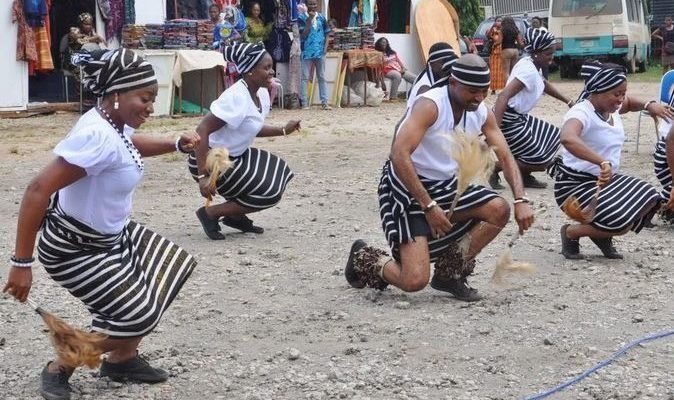
The Tiv people of Benue State possess a rich cultural heritage expressed through the Tiv language, traditional music, dance, storytelling, food and communal customs. Their cultural identity is reflected in the rhythm of Swange, Ishẹn and Girinya dances, the sounds of traditional instruments such as Agbande, Ilyu and Indyer, and indigenous meals including ruam kumen, ruam nahan, pete and akuto. Tiv communal customs are rooted in kwav, the spirit of kinship and togetherness, as well as farming cooperation, hospitality, respect for elders and shared responsibility. From the bold black-and-white patterns of A’nger to the lively rhythm of Swange, Tiv culture continues to preserve the history, creativity and identity of its people.
The Tiv language preserves the people’s folktales, proverbs, songs and traditional knowledge. Through Kwagh-alom, an ancient storytelling tradition, elders shared stories that entertained children and taught important values. This tradition later developed into Kwagh-hir, a unique Tiv theatrical performance that combines storytelling, music, dance, drama, masquerade, puppetry and colourful costumes. Kwagh-hir remains an important expression of Tiv creativity and cultural education.
Music and dance are central to Tiv cultural celebrations. Traditional performances such as Swange, Girinya, Ishẹn, Ijov-mbakugh, Ingyough, Takera and Tsue-tsela bring rhythm, storytelling and communal participation to cultural festivals, marriage celebrations and other important ceremonies. Swange, one of the best-known Tiv music-and-dance traditions, expresses joy, unity and cultural identity through coordinated movement, singing and rhythmic accompaniment. During traditional marriages and community festivals, these performances create opportunities for families to celebrate, strengthen social bonds and pass Tiv customs to younger generations.
Traditional Tiv music is supported by indigenous instruments such as the Agbande drums, the Ilyu and Indyer wooden instruments, the Adiguve bowed instrument and the Kolugh ku Bua, a cow-horn instrument traditionally used to call farming groups together. These instruments were used not only for entertainment but also for communication, ceremonies, celebrations and community activities.
Tiv culture is deeply connected to farming, family life, hospitality and communal cooperation. The fertile lands of Benue have supported the cultivation of yam, cassava, maize and other crops for generations. Traditional meals such as ruam kumen and ruam nahan reflect this agricultural heritage and are often shared during family gatherings and cultural celebrations.
Traditional leadership also remains important to Tiv identity. The Tor Tiv serves as the paramount traditional ruler and a custodian of Tiv customs and heritage. Values such as respect for elders, unity, shared responsibility and peaceful community life continue to shape Tiv social traditions.
From A’nger to Swange, from Kwagh-alom to Kwagh-hir, and from the rhythms of Agbande to the messages of Ilyu and Indyer, Tiv culture remains a living heritage. Its language, music, dance, customs and traditional names preserve the identity of the people and connect the wisdom of the past with the hopes of future generations.
