
By Mary Ann Ogbu
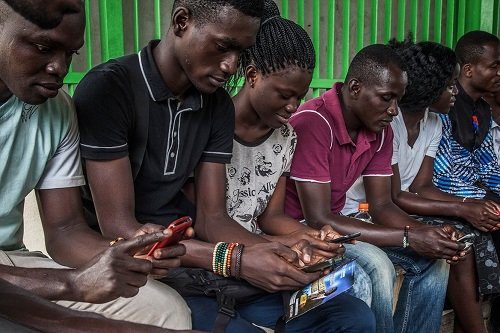
Scroll through any social media platform today and you are likely to find young people learning new skills, showcasing talents, building businesses, communicating with friends or simply watching entertaining videos. Social media has become deeply woven into the daily lives of youths, changing the way they learn, communicate and interact with the world around them.
But beneath the entertainment and opportunities lies an important question: Is social media helping young people more than it is harming them?
The answer is not entirely straightforward. While social media has opened doors to education, creativity, communication and economic opportunities, excessive or irresponsible use can also lead to distraction, pressure and exposure to harmful online activities.
Mrs. Amara Chima, a secondary school teacher, said: “The social media is a platform created for people to communicate and interact from any destination and this platform is used by people even the youth but talking about the effects of it on the youth, it can serve as an avenue for distraction as it can disturb the youth’s time to focus on their studies and perform well academically.”
Her observation highlights the importance of maintaining a balance between social media and academic responsibilities, particularly among students who may find themselves spending more time online than they originally intended.
While social media can be distracting, it has also become an important source of information and learning for many young people. Online platforms allow the youth to discover new skills, access educational materials and meet people with similar interests. Regina, a Lagos State University undergraduate, shared her experience, saying: “Social media has made me get to know about a lot of things I would never have known. These platforms have helped me in learning skills online especially how to create and make ai videos and also served as an aid in doing my assignments. Additionally, I have met people with similar interests, even though sometimes I spend more time watching videos and reels than I planned.”
Her experience demonstrates the dual nature of social media. The same platform that provides access to useful information and skills can also become a source of distraction when its use is left uncontrolled.
Blessing Eze, a social media user, shared her concerns about this pressure, saying:
“Sometimes I see people making posts about their luxurious lifestyle, achievements and all that, and I realized that a lot of people post only the best part of their lives online and to deceive especially the youths, many would start thinking of shortcuts to success.”
The pressure to appear successful can influence the choices young people make. When online success is constantly presented without the struggles behind it, some youths may develop unrealistic expectations about how quickly they should achieve their goals.
Christopher Ogbu, a teenager, expressed concern about this issue, saying:
“One possible effect of social media is that it could lead to fraudulent acts and scammers committed by people online and these crimes are mostly committed by the youths, they commit all manner of online social vice and this has caused more harm than good.”
His concern raises questions about the importance of teaching young people about responsible online behaviour and helping them understand the consequences of participating in harmful or illegal activities.
Mrs. Maureen Julius , a parent, from Oko-Afo said: “I believe social media can be beneficial, and a lot of people, including youths, make money from it. But we as parents should educate our youths on how to use social media effectively without wasting their time watching irrelevant things. We should help them build their mindset because they are considered to be the leaders of tomorrow. They should also learn to protect their privacy and avoid sharing personal information or pictures online.”
Her comments point to the importance of digital literacy and parental guidance. Rather than simply keeping young people away from social media, parents and guardians can help them understand how to use it safely, responsibly and productively.
Despite the concerns surrounding social media, its benefits cannot be ignored. Young people can use these platforms to learn skills, promote businesses, showcase talents, communicate with others and access opportunities that may otherwise be difficult to find.
Music, dancing, writing, fashion, comedy and other creative fields have found large audiences through social media. For many young people, the platforms have become a way to express themselves and connect with people beyond their immediate communities.
However, these opportunities come with responsibility. Young people need to learn how to manage their time, protect their privacy, question unrealistic content and avoid harmful online activities. The views shared by Mrs. Amara Chima, Regina, Blessing Eze, Christopher Ogbu and Mrs. Maureen Julius reveal that social media cannot simply be classified as entirely good or entirely bad. Its impact depends largely on how it is used.
For today’s youth, responsible social media use means knowing when to put the phone down, protecting personal information, avoiding harmful online activities, questioning unrealistic content and making time for education, family, friendships and personal development. Parents and teachers also have a role to play by providing guidance and helping young people understand both the opportunities and risks that come with living in an increasingly digital society.
Social media has changed the world in ways that cannot be ignored. It has become a classroom, marketplace, entertainment centre and communication channel. It has also become a platform through which young people can showcase their talents and pursue opportunities.
Yet, like any powerful tool, it can be beneficial or harmful depending on how it is handled. The goal should not necessarily be to keep young people away from social media. Instead, they should be equipped with the knowledge, discipline and awareness needed to use it wisely.
For today’s youth, the challenge is no longer simply learning how to use social media. It is learning how to make social media work for them without allowing it to control them.
