
By Fortune Mbonu
From mysterious caves and cascading waterfalls to tranquil lakes and the painful memories of war, South-East Nigeria offers a tourism experience that goes far beyond its bustling cities.
There is a certain rhythm to travelling through South-East Nigeria.
The roads wind through hills and valleys. Palm trees rise above communities. Markets bustle with traders, while old towns sit quietly beside landscapes that have witnessed generations come and go.
But beyond the familiar images of commerce and urban life lies another side of the region, one shaped by nature, history, spirituality and culture.
Across Abia, Anambra, Ebonyi, Enugu and Imo states are attractions capable of turning the region into one of Nigeria’s most compelling tourism destinations. From caves buried beneath tropical forests to lakes that have sustained communities for generations, the South-East possesses an unusual combination of natural and historical treasures.
Here are five destinations that tell that story.
1. Ogbunike Caves, Anambra: A Journey Into the Earth
Few places capture the mystery of South-East Nigeria quite like the Ogbunike Caves.
Hidden within a valley surrounded by tropical rainforest in Ogbunike, Anambra State, the caves form an intricate network of chambers and tunnels that stretches beneath the hills.
But getting there is part of the experience.
Visitors descend roughly 317 steps through the forest before reaching the cave entrance. At the bottom, the landscape changes dramatically. The sunlight gives way to darkness, the air becomes cooler, and the enormous cave chambers reveal themselves. UNESCO’s description of the site notes that the main chamber is approximately five metres high, 10 metres wide and 30 metres long, with several tunnels branching into the underground system.
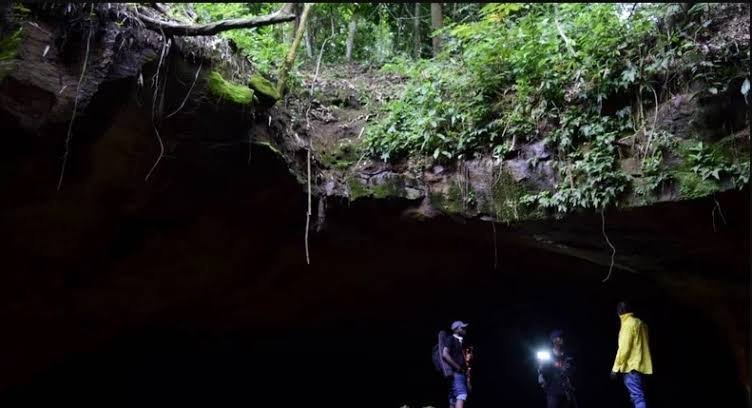
The caves are also home to colonies of bats, streams and diverse wildlife.
For generations, the caves have carried spiritual and cultural significance for the surrounding communities. Traditional practices remain associated with entering the caves, while an annual celebration commemorates their discovery. UNESCO has consequently placed Ogbunike Caves on Nigeria’s Tentative List of World Heritage Sites.
It is the kind of destination where tourism becomes a journey through both nature and memory.
2. Awhum Waterfall: Where Water Meets Mystery
Deep in Awhum town in Enugu State is another of the South-East’s remarkable natural attractions.
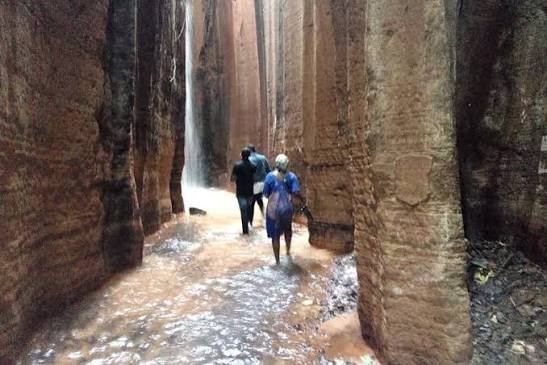
The Awhum Waterfall tumbles down a towering rock formation, creating a dramatic landscape surrounded by vegetation and rocky terrain. The waterfall is about 30 metres high, and one of its most intriguing features is that part of the water remains warm even when the surrounding environment is cool.
Reaching the waterfall is itself an adventure.
Visitors must trek from the parking area through the surrounding landscape before arriving at the falls. The journey transforms a simple sightseeing trip into a hiking experience.
The attraction is also closely associated with the nearby monastery, giving Awhum a spiritual dimension that has helped make it a destination for religious visitors as well as tourists and nature lovers.
For those looking to escape the noise of the city, Awhum offers something increasingly rare: silence broken only by the sound of falling water.
3. Ngwo Pine Forest: Enugu’s Green Escape
Imagine walking beneath rows of towering pine trees while the smell of pine fills the air.
That is the experience awaiting visitors at Ngwo Pine Forest, located in Ngwo, Enugu State.
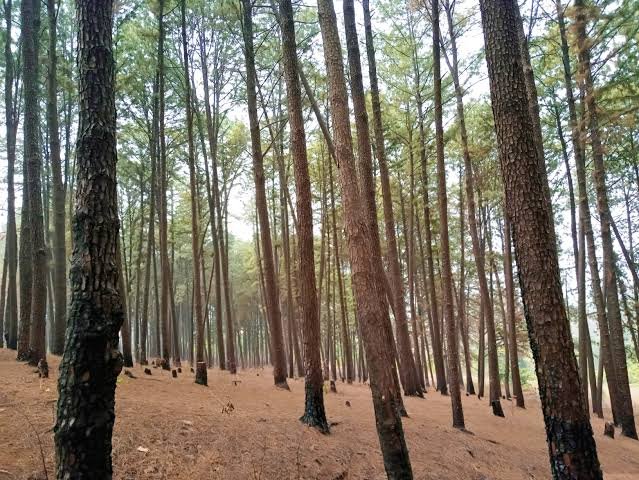
The forest provides a striking contrast to the busy urban environment of Enugu. Tall pine trees form a natural canopy, creating a cool and peaceful atmosphere that makes the location popular for relaxation, photography, picnics and outdoor exploration.
But the forest has another secret.
Deep within it lies Ngwo Cave and Waterfall, where a waterfall flows through a limestone cave, forming a shallow pool before continuing as a stream.
This combination makes Ngwo unusual.
A visitor can experience a forest, a cave and a waterfall within the same excursion.
It is also a reminder that tourism does not always require grand structures. Sometimes the most compelling attraction is simply a landscape that has been allowed to retain its character.
With proper conservation, visitor infrastructure and community participation, Ngwo could become one of the signature eco-tourism destinations of the region.
4. Oguta Lake, Imo: The Lake That Sustains a Community
In Imo State, the landscape changes again.
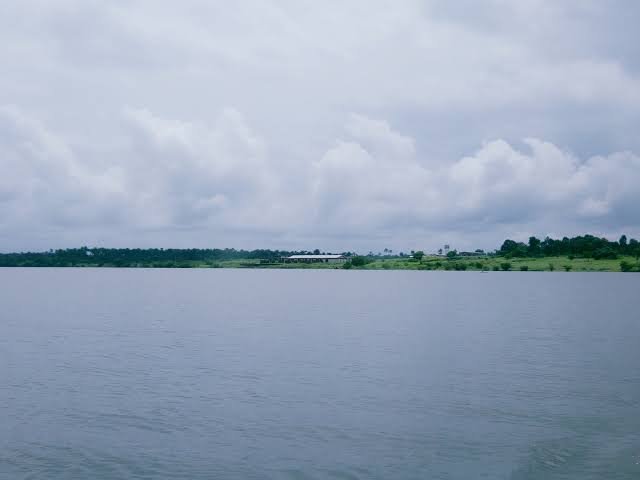
The hills and forests give way to the tranquil waters of Oguta Lake, the largest natural lake in Imo State and one of the region’s notable natural attractions.
For visitors, the lake offers an opportunity to slow down.
Boats move across the water while fishermen go about their daily activities. The lake is not simply a sightseeing location; it is connected to the economic and social life of the surrounding community.
Historically, Oguta also served as a port for the movement of palm products, demonstrating how the lake has long played an economic role in the region. That is what makes Oguta particularly important from a tourism perspective.
It is not a landscape separated from human life.
It is a landscape that has helped sustain human life.
With organised boat tours, waterfront recreation, cultural performances, hospitality facilities and stronger environmental protection, Oguta could become a major leisure destination in South-East Nigeria.
5. National War Museum, Umuahia: Where History Refuses to Be Forgotten
The National War Museum in Umuahia, Abia State, preserves memories of one of the most consequential and traumatic periods in Nigeria’s history: the Nigerian Civil War of 1967–1970.
Established in 1985, the museum contains military equipment and artefacts associated with the conflict. Its collections include weapons, armoured vehicles, aircraft and other military hardware associated with both the Nigerian side and the former Biafran side.
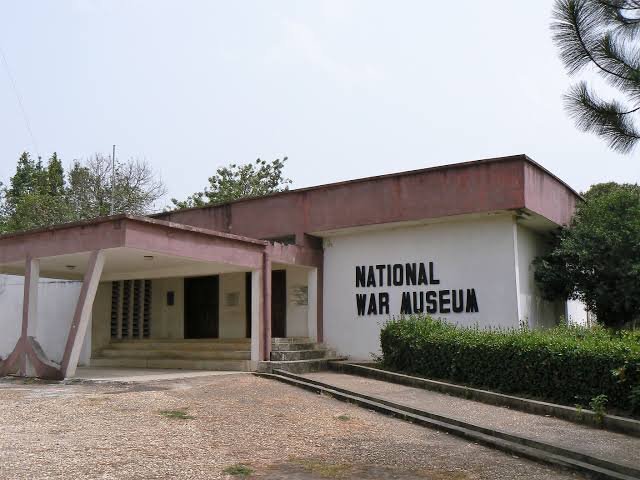
The museum’s significance goes beyond the objects displayed on its grounds.
Every tank, aircraft or weapon represents a piece of a much larger story. A story of political conflict, hunger, displacement, loss and the eventual reunification of a country.
For younger generations who did not experience the war, the museum provides a physical connection to an event they may otherwise encounter only through textbooks and family stories.
It demonstrates an important truth about tourism: Tourism is not always about escaping history. Sometimes, it is about confronting it.
